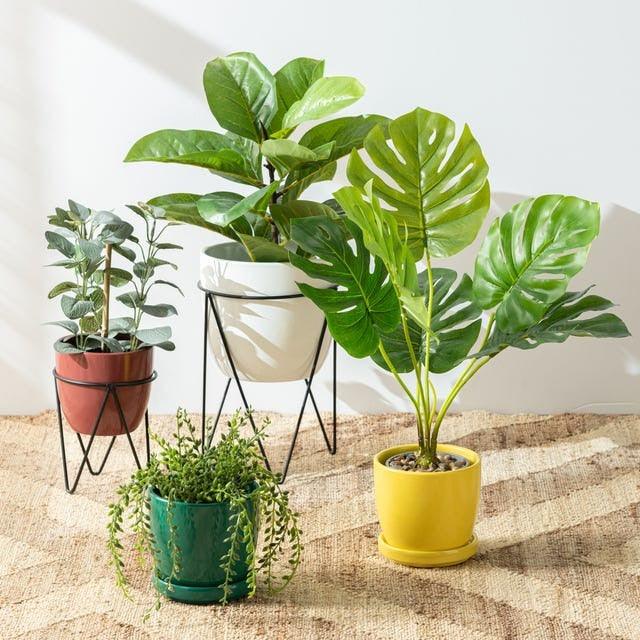
Botanical Name: Syngonium podophyllum
Common Names: Goosefoot Plant, nephthytis, elephant ear plants
Description: Is an evergreen perennial native to Central and South America. This plant grows large, thin, heart shaped leaves which come in a variety of vibrant colors. This particular variety is a dark green-red color.
Botanical Name: Syngonium podophyllum
Common Names: Goosefoot Plant, nephthytis, elephant ear plants
Description: Is an evergreen perennial native to Central and South America. This plant grows large, thin, heart shaped leaves which come in a variety of vibrant colors. This particular variety is a bright yellow - gold color with reddish - orange veins.
Botanical Name: Crassula ovata
Common Names: Jade succulent, Money Plant
Description: The crassula ovata is an evergreen succulent native to South Africa. It has fascinating green finger-like leaves with a red circle on the tips and can produce small pinkish-white star-shaped flowers during late fall and early winter.
Botanical Name: Philodendron hederaceum
Common Name(s): Velvet Philodendron, Philodendron Micans, Heart-Leaf, Sweetheart Plant
Description: Philodendron hederaceum is also known by the names Heart-Leaf Philodendron and Sweetheart Plant. This species originates from Central America and parts of the Caribbean and is a commonly grown houseplant in many places, including the UK. This type of philodendron plant has velvet-textured heart-shaped leaves that are greenish bronze with reddish brown undersides. It produces long vining stems.
Botanical Name: Sansevieria Trifasciata
Common Names: Snake plant, Laurentii, Mother-in-law's tongue
Description: This evergreen perennial native to tropical West Africa and Nigeria, is a great addition to any office or household as a natural air purifier. Snake plants have strong and sturdy, sword shaped leaves which are drought tolerant and retains the plants water. This plant can be easily propagated by leaf cuttings so you can multiply your family of snake plants or give them away as a gift. This particular variety has a yellow outline along with a flat deep green towards the middle of each stalk.
Botanical Name: Peperomia
Common Names: Peperomia, Radiator Plant
Description: Peperomia is a perennial epiphyte native to the tropical regions of Central and South America. Its short and sturdy stems wield thick, circular leaves which are a deep jade color and retain most of their water. The Peperomia is very easy to care for and requires similar care habits to most succulents making it a great addition to any desk or shelf.
Botanical Name: schefflera arboricola
Common Names: Dwarf umbrella tree
Description: The Umbrella plant is the dwarf version of the larger schefflera acrinophylla native to Taiwan. This evergreen wields very slender stalks with oblong leaves arranged in a circular fashion at the end of each stem. This particular variegated variety will have splashes of washed out yellow on many of its leaves.
Botanical Name: Hoya carnosa
Common Name(s): Porcelain Flower, Wax Plant, Honey Plant
Description: Porcelain flower or wax plant is a commonly grown houseplant. It has long slender vines covered with waxy, deep green leathery leaves sometimes flecked with silver or creamy white. To make this plant appear denser, wrap its sparsely leaved stems around a bamboo trellis and secure with florist tape or nylon stocking strips. Bright indirect light year-round is ideal. Allow the soil to dry out between waterings. Wax plants love high humidity and the foliage appreciates misting. The flowers are star-shaped, in parachute-shaped clusters, with a sweet fragrance and may produce a sticky sap.
*Limit 2 Per Customer*
Botanical Name: Aeschynanthus
Common Names: Lipstick plant.
Description: The lipstick plant is a tropical epiphyte with thick waxy leaves which run along it's vine like stems. This plant will reward you with very unique reddish orange flowers around early spring.
Botanical Name: Ficus lyrata
Common Name(s): Fiddle-leaf Fig
Description: Native to tropical western Africa, Ficus lyrata, commonly known as the fiddle-leaf fig, has very large green leaves with a leather-like texture. Although Ficus lyrata grows naturally in lowland tropical forests it can thrive in a large range of environments. Place in bright indirect sunlight, on the ground where it can grow up to 6' tall. Keep soil moist. Toxic to pets if ingested.
Botanical Name: Didymochlaena truncatula
Common Name(s): Mahogany Maidenhair, Tree Maidenhair
Description: Native to tropical South America, South Africa, and south east Asia, this unique fern is the only species in its genus and family. The Mahogany fern is named for its deep, wood brown that appears for its first growth before maturing to a woody green. Full maturity sees this fern growing up to 3x3 feet. Its ease of growth earned its reputation as "a Maidenhair without the fuss." More tolerable to light than other ferns, a Mahogany fern is the perfect gift for the beginner houseplant owner.
Botanical Name: Dracaena marginata 'Colorama'
Common Name(s): Dragon Tree
Description: Dracaena are composed of a large group of popular foliage plants. Most grow strongly upright with long, straplike leaves variegated with white, cream, or red. Dracaenas grow well at average room temperatures but don't like cold drafts. Give plants medium to bright direct sunlight to maintain the best leaf color. Allow the soil to dry to the touch between waterings.
Botanical Name: Aglaonema 'Maria'
Common Name(s): Chinese Evergreen
Description: The Chinese Evergreen also known as Aglaonema, it is an easy plant to grow and care for. Native to Asia it just about tolerates any indoor condition. The larger leaves come with unique patterns that work with all types of planters and furniture.
Botanical Name: Anthurium andraeanum
Common Names: Painted anthurium, flamingo flower, tailflower, painter's palette, laceleaf
Description: These exotic houseplants have glossy heart-shaped leaves with a beautiful bloom that comes in a large array of colors. They can bloom all year long with enough light and water. The Anthurium originated in the South American rain forest so they thrive in high-humidity environments with a decent amount of shade.
Botanical Name: Kalanchoe blossfeldiana
Common Names: Flaming Katy, Christmas Kalanchoe
Description: A compact succulent with thick, glossy green leaves and clusters of small, vibrant flowers in colors like red, pink, orange, yellow, or white. It is popular as a long-lasting indoor flowering plant.
Care: Bright light to full sun, water when soil is dry, use well-draining soil.
Botanical Name: Portulacaria afra 'Medio-picta'
Common Names: Dwarf Jade, Midstripe Rainbow Bush
Description: Bonsai Jade Dwarf Rainbow is a slow-growing succulent bonsai with attractive, bright reddish-pink stems and small green leaves featuring broad white stripes in the center
Botanical Name: Epipremnum aureum
Common Name(s): Pothos 'Shangri La'
Description: Pothos Shangri La (Epipremnum aureum) is a mutated form of the common yellow variegated 'Golden' Pothos! The leaves are contorted with hints of yellow variegation. A fairly uncommon plant and one that every Pothos collection needs!
Botanical Name: Acanthocereus Tetragonus
Common Names: Fairy Castle Cactus
Description: The cactus plant also originates in popular regions of Mexico, the Caribbean, Central America, and northern South America. The spiky plant shares resemblance with the turrets of a castle due to its curvy, columnar shape. This is the reason why it is popularly known as a fairy castle cactus.
Botanical Name: Aglaonema wishes
Common Name(s): Chinese Evergreen
Description: Chinese Evergreen Pictum Tricolor has striking, camouflaged foliage, with patterns of green, silver, and light green. The leaves are elliptical, featuring a mesmerizing mix of colors that resemble a military camouflage pattern, making it a standout among foliage plants.
Botanical Name: Pothos Epipremnum aureum 'Manjula'
Common Names: Mutant Manjula'
Description: The Manjula Pothos is characterized by large, heart-shaped leaves with white, green, and cream variegation. These low-maintenance, vining houseplants thrive in bright, indirect light, moist but well-draining soil, and high humidity.
Botanical Name: Heptapleurum arboricola
Common Names: Dwarf umbrella tree
Description: Bonsai Schefflera Arboricola features glossy, dark green leaves arranged in a whorl pattern, resembling a "helicopter" or umbrella.
Botanical Name: Haworthiopsis limifolia
Common Names: Fairy Washboard
Description: The Haworthia is a compact, low-maintenance succulent with thick, rubbery, dark green leaves featuring distinct white ridges.
Botanical Name: Begonia masoniana
Common Name: "Iron Cross"
Description: It features large, textured, bright green leaves adorned with a prominent, dark brown, iron cross-shaped pattern in the center. The leaves have a unique, blistered or pebbly texture and are often described as having a velvety feel. While it can produce small white flowers, the main attraction is its distinctive, patterned leaves.
Botanical Name: Begonia soli-mutata
Common Names: Sun-Changing Begonia
Description: Begonia Soli Mutata is an evergreen, creeping, rhizomatous perennial mostly grown for its spectacular foliage of heart-shaped, dark green leaves adorned with lime-green radiating veins and scarlet edges
Botanical Name: Philodendron pinnatifidum × melinonii
Common Name(s): Philodendron Golden Serratum, Philodendron Golden Ring of Fire, or Philodendron Golden Jungle Boogie
Description: The Philodendron 'Golden Crocodile' is a striking, textured plant with uniquely shaped, golden-yellow leaves that resemble crocodile skin. It's known for its vibrant, serrated foliage and glossy, heart-shaped leaves.
Botanical Name: Phalaenopsis amabilis
Common Names: Moon Orchid, Moth Orchid, The Lovely Phalaenopsis
Description: Phalaenopsis, sometimes referred to as moth orchids, is a genus of roughly 70 plant species in the Orchidaceae family. With long, coarse roots, short, leafy stems, and long-lasting, flat blooms organized in a flowering stem that frequently branches at the end, orchids in this genus are monopodial epiphytes or lithophytes.
Botanical Name: Stapelia hirsuta
Common Names: African Starfish Flower Carrion Flower
Description: The Stapelia, commonly known as the African Starfish Flower, is a succulent known for its unique, starfish-shaped flowers and fleshy, cactus-like stems. The most distinctive feature is the large, starfish-shaped flowers that can be a variety of colors, including dark red, maroon, or cream with maroon markings, and are often covered in hairs.
Botanical Name: Anthurium andraeanum
Common Names: Painted anthurium, flamingo flower, tailflower, painter's palette, laceleaf
Description: These exotic houseplants have glossy heart-shaped leaves with a beautiful bloom that comes in a large array of colors. They can bloom all year long with enough light and water. The Anthurium originated in the South American rain forest so they thrive in high-humidity environments with a decent amount of shade.
Botanical Name: Phalaenopsis amabilis
Common Names: Moon Orchid, Moth Orchid, The Lovely Phalaenopsis
Description: Phalaenopsis, sometimes referred to as moth orchids, is a genus of roughly 70 plant species in the Orchidaceae family. With long, coarse roots, short, leafy stems, and long-lasting, flat blooms organized in a flowering stem that frequently branches at the end, orchids in this genus are monopodial epiphytes or lithophytes.
Botanical Name: Phalaenopsis amabilis
Common Names: Moon Orchid, Moth Orchid, The Lovely Phalaenopsis
Description: Phalaenopsis, sometimes referred to as moth orchids, is a genus of roughly 70 plant species in the Orchidaceae family. With long, coarse roots, short, leafy stems, and long-lasting, flat blooms organized in a flowering stem that frequently branches at the end, orchids in this genus are monopodial epiphytes or lithophytes.
Botanical Name: Crassula capitella ‘Red Pagoda’
Common Name: Red Pagoda, Campfire Crassula
Description:A vibrant succulent with stacked, triangular leaves that turn bright red in full sun. Grows in clumping, pagoda-like shapes and stays compact, making it perfect for pots or rock gardens. Easy to care for, drought-tolerant, and adds a bold pop of color to your collection.
Botanical Name: Cordyline fruticosa ‘Willie’s Gold’
Common Name: Cordyline Willie's Gold
Description: A striking tropical plant with long, narrow leaves splashed with gold and green tones. It has an upright growth habit and adds a bold accent to patios, gardens, or indoor spaces with bright light. Easy to grow and drought-tolerant once established.
Botanical Name: Hoya sigillatis
Common Name(s): Wax Plant or Porcelain Flower
Description: Hoya sigillatis 'Round Leaf' is a unique Hoya variety characterized by its rounded, deep green leaves that often feature prominent silver flecks and can develop warm reddish tones in brighter light.
Botanical Name: Schefflera arboricola ‘Trinette’
Common Name: Schefflera Trinette, Variegated Umbrella Plant
Description: A popular indoor plant with glossy green and creamy yellow variegated leaves. It has a bushy, upright growth habit and is easy to care for, tolerating a range of light conditions. Perfect for adding a bright, tropical feel to your home or office.
Botanical Name: Adiantum hispidulum
Common Name(s): Rosy Maidenhair Fern
Description: The Rosy Maidenhair is a delicate, fine-textured fern with lacy fronds that emerge pinkish-bronze or rosy when young, maturing to soft green. Fronds are finely divided with small leaflets arranged along slender black stems, creating a graceful, airy appearance. It prefers humid, shaded environments, making it ideal for indoor or protected outdoor positions. The Rosy Maidenhair requires consistently moist soil and good drainage to thrive and adds a soft, elegant touch to fern collections or shaded gardens.
Botanical Name: Pentas lanceolata
Common Name: Red Pentas, Egyptian Starcluster
Description: Pentas Red is a vibrant flowering plant known for its clusters of star-shaped red blooms. It attracts butterflies and hummingbirds and thrives in full sun with well-drained soil. Great for adding bright color to gardens, containers, or landscapes.
Botanical Name: Cupressus macrocarpa ‘Goldcrest’
Common Name: Lemon Cypress, Lemon Cypress Topiary
Description: A bright chartreuse-green conifer with a natural citrus scent, shaped into a tidy topiary form. This compact evergreen is perfect for containers, entryways, or sunny indoor spots. It thrives in full sun and adds year-round color and structure.
Botanical Name: Caladium bicolor ‘Red Flash’
Common Name: Caladium Red Flash
Description: A bold foliage plant with large, heart-shaped leaves in deep green splashed with bright red and pink veins. Grown for its vibrant color, it's ideal for shaded gardens, containers, or indoor displays. Thrives in warm, humid environments with indirect light.
Botanical Name: Maranta leuconeura var. kerchoveana
Common Names: Maranta Black , Black Prayer Plant
Description: Maranta Black is a stunning cultivar of the prayer plant family. It has broad, velvety dark green to nearly black leaves with lighter green or silvery veins. Like other prayer plants, its leaves fold upward at night in a “praying” motion, making it both decorative and dynamic.
Care: Maranta Black grows best in bright, indirect light. Keep the soil slightly moist and avoid letting it dry out completely. It likes warm temperatures and high humidity. Use well-draining soil.
Botanical Name: Farfugium japonicum
Common Name: Leopard Plant, Tractor Seat Plant
Description: A striking foliage plant with large, glossy, round to kidney-shaped leaves that create a bold, architectural look. Leaves are deep green, sometimes marked with yellow spots or variegation depending on the variety. In fall, it produces bright yellow daisy-like flowers that rise above the foliage.
Care: Grows best in partial to full shade, with moist, rich soil and consistent watering. Protect from harsh sun to prevent leaf scorch.
Botanical Name: Pilea cadierei ‘Mojito’
Common Names: Aluminum Plant ‘Mojito’ , Pilea ‘Mojito’
Description: A compact foliage plant with oval, serrated leaves splashed in a mosaic of green, silver, and creamy variegation. Each leaf is uniquely patterned, often with a speckled or marbled effect that gives it a lively, textured look. Prefers bright, indirect light, moderate watering (let the top soil dry slightly between waterings), and enjoys average to high humidity.
Botanical Name: Philodendron Bicolor
Common Names: Philodendron Bicolor
Description: A rare climbing philodendron with long, narrow, velvety green leaves that show two tones of color. It grows beautifully on moss poles or supports.
Care: Keep in bright, indirect light. Water when the top soil feels dry. Use a chunky, well-draining mix. Loves warmth and high humidity. Feed monthly in spring and summer. Provide a pole or support for climbing.
* Botanical Name: Alocasia Amazonica* Common Names: Reversa* Description: The Alocasia Amazonica 'Reversa' has narrow, arrowhead-shaped, green leaves. The Alocasia Amazonica is a unique houseplant but beware that it is on the harder side to care for. It requires bright, indirect sunlight as well as soil that is constantly moist from watering. Toxic to pets.***Very sensitive to the cold***
Say goodbye to fungus gnats, flies, aphids, and other pesky plant pests with our Sticky Traps! These effective, easy-to-use traps protect your plants without harsh chemicals, making them a safe choice for your indoor houseplants or outdoor gardens. Designed with a vibrant yellow color that naturally attracts pests, these traps stop pests in their tracks—literally. Keep your plants thriving while keeping pests at bay!
Description
Not your ordinary plant food. Fuel your garden’s growth and ensure a healthy diet with this nutritious, protein-infused booster that will help your plants live their best lives. Made from recycled supermarket food waste, this nourishing supplement supports your overall soil fertility for greener, thicker leaves, more blooms, and deeper roots. Learn more.
Nutritional supplement for indoor gardening and houseplants
Improves your plant’s uptake of essential nutrients, strengthening from root to shoot
Supports soil fertility with biological compounds made from recycled supermarket food waste
Infused with rosemary oil for aromatherapy and antioxidant benefits
How to Use
For optimal results use in your regular watering cycle. Also ideal for: transplants, potting mixes, as a rooting compound or in hydroponics
Mix: 1 oz Arber concentrate with 32 oz water or 4 oz Arber concentrate with 1 Gallon of water
Apply directly to soil. One application every 10-14 days for wellness.
Formulation
To make our proprietary Plant Food, we rescue produce from the supermarket that was originally destined for the landfill. We apply an enzyme that rapidly digests the food waste, resulting in complex forms of nutrients including carbohydrates, amino acids (proteins), organic acids, and fats. This nutrient dense liquid compost becomes an ideal form of energy for plants and soil organisms that help them thrive.Active Ingredients:
Total Nitrogen (N): 3%
Available Phosphate (P205): 2%
Soluble Potash (K20): 1%
Net Contents: 1 pint/ 16oz concentrate
Healthy soil is the basis to growing vibrant, thriving, and long-lasting plants. Our Organic Soil & Root Boost is a concentrated blend of Mycorrhizae, Bacillus, and beneficial soil microbes that gives life to your soil. Our easy to use shake-on granule promotes strong root development, nutrient efficiency, and biodiversity in your soil.
No mess, no stress with our Repotting Mat. This durable, weatherproof mat keeps your workspace free from dirt and debris while tending to your plants. Our eco-friendly and reusable mat is easy to clean, assemble, and store making your messy plant tasks enjoyable!
Description
Our Organic Disease & Insect Control Starter Set offers two of our best selling products, Organic Bio Insecticide and Organic Bio Fungicide in a trial size package containing two 8oz concentrates. Our patented, certified organic and biological ingredients protect against fungus, mold, mildew, rot, and many other plant diseases.
How to Use
For the lushest, greenest results and maximum protection from disease, please refer to each product label.
Formulation
Organic Bio Fungicide
Arber's Organic Bio Fungicide is made from a unique strain of bacteria originally discovered in a rice field in Northern California. We grow and concentrate two major groups of natural compounds to make a powerful combination that stops germinating plant disease spores. Our good bacteria grows over the surface of leaves and roots, creating a protective shield that wards off bad bacteria and prevents disease from developing.
Active Ingredients:
Bacillus amyloliquefaciens strain F727* cells and spent fermentation media: 96.4%
Other Ingredients: 3.6%
*Contains a minimum of 1x10⁹ cfu/mL of productNet Contents:1 pint/ 16oz concentrate
Organic Bio Insecticide
One of our more unique ingredients, this product is made from a new species of bacteria found near a Buddhist temple in Japan. As the bacteria grow, they make a cocktail of over 20 natural compounds that work together as a pest control and a plant stimulant. While the control stops feeding and development, the stimulant acts to increase root hair growth leading to a healthier plant. With multiple active compounds, the complexity greatly reduces the possibility of resistance.
Active Ingredients:
Heat-killed Burkholderia spp, strain A396 and spent fermentation media spent fermentation media: 94.46%
Other Ingredients: 5.54%
*Contains not less than 1,500 Beet Armyworm Killing Units (BAWKU)/mg of active ingredient. Note: The percent active ingredient does not indicate product performance and potency measurements are not federally standardized.Net Contents:1 pint/ 16oz concentrate